Ash is one of the most common trees in Lincolnshire hedgerows, field margins and older gardens. Ash dieback, a disease caused by the fungus Hymenoscyphus fraxineus, has been spreading through British ash for years. Many owners now have an ash that looks thin or patchy and want to know whether it needs to come down.
The short answer is: not automatically. This guide draws on the Arboricultural Association's guidance on managing ash dieback.
How to recognise ash dieback
The signs are easiest to judge in summer, when the tree should be in full leaf:
- Dieback in the crown. Dead twigs and branches scattered through the canopy, often starting at the tips.
- Early leaf loss. Leaves wilting, browning or dropping well before autumn.
- Leaves bunched at the branch tips. Tufts of foliage on otherwise bare shoots.
- Lesions at the base. Dark, dead patches of bark around the trunk base. These are not always obvious, and some trees have them with little dieback in the crown.
Other problems look similar. Drought, waterlogging, root damage and fungi such as honey fungus can all cause decline, so it is worth having the tree looked at rather than assuming.
Why infected ash is a safety issue
The disease does more than make a tree look thin. Wood grown while the tree is infected tends to be less dense, and over several years branches, and possibly the trunk, can become mechanically weaker. That raises the chance of limbs snapping without warning, especially in wind. Secondary decay, such as honey fungus at the base, can make a tree unstable as well. Dead trees are prone to collapse and dead branches are prone to break.
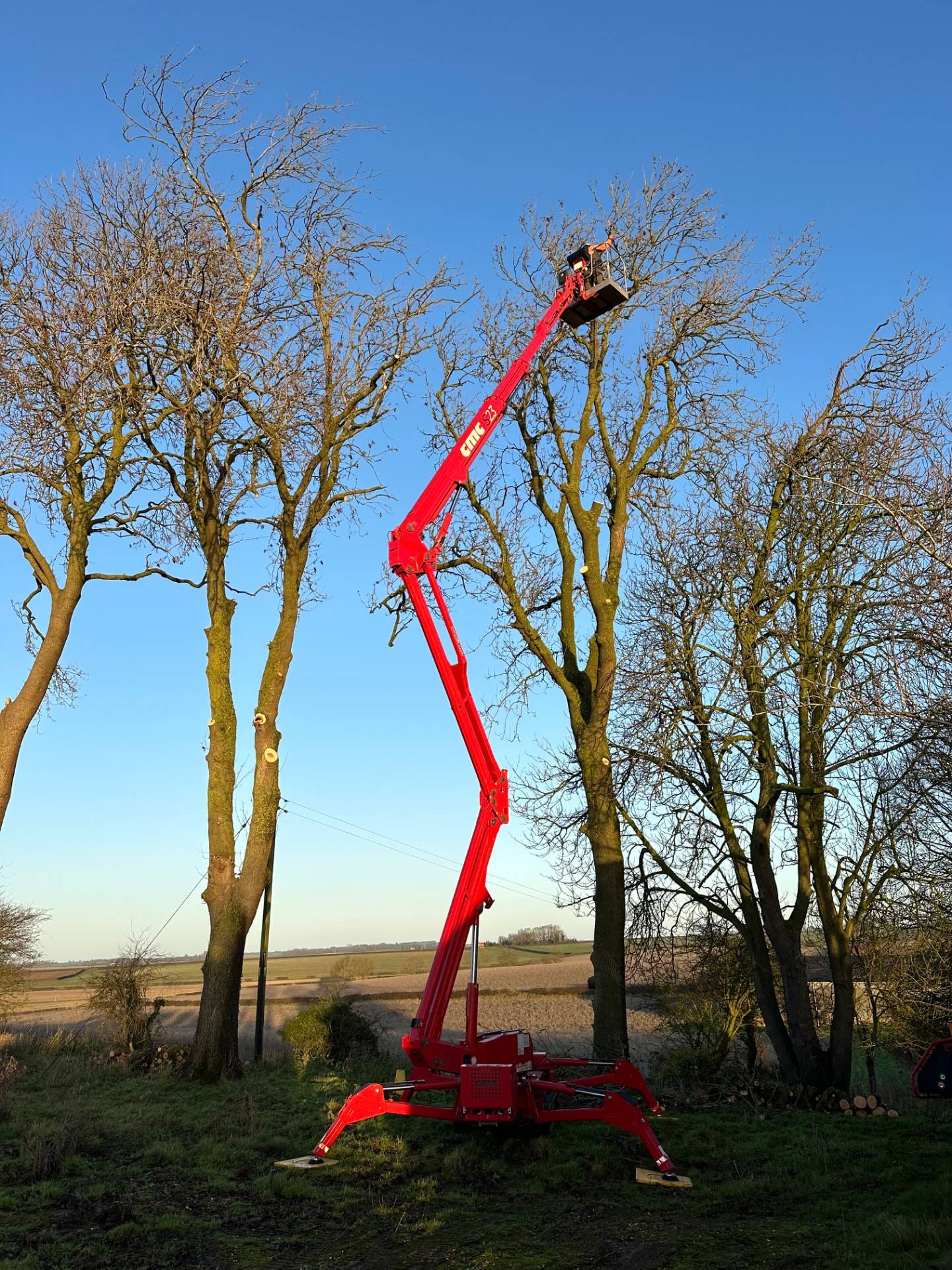
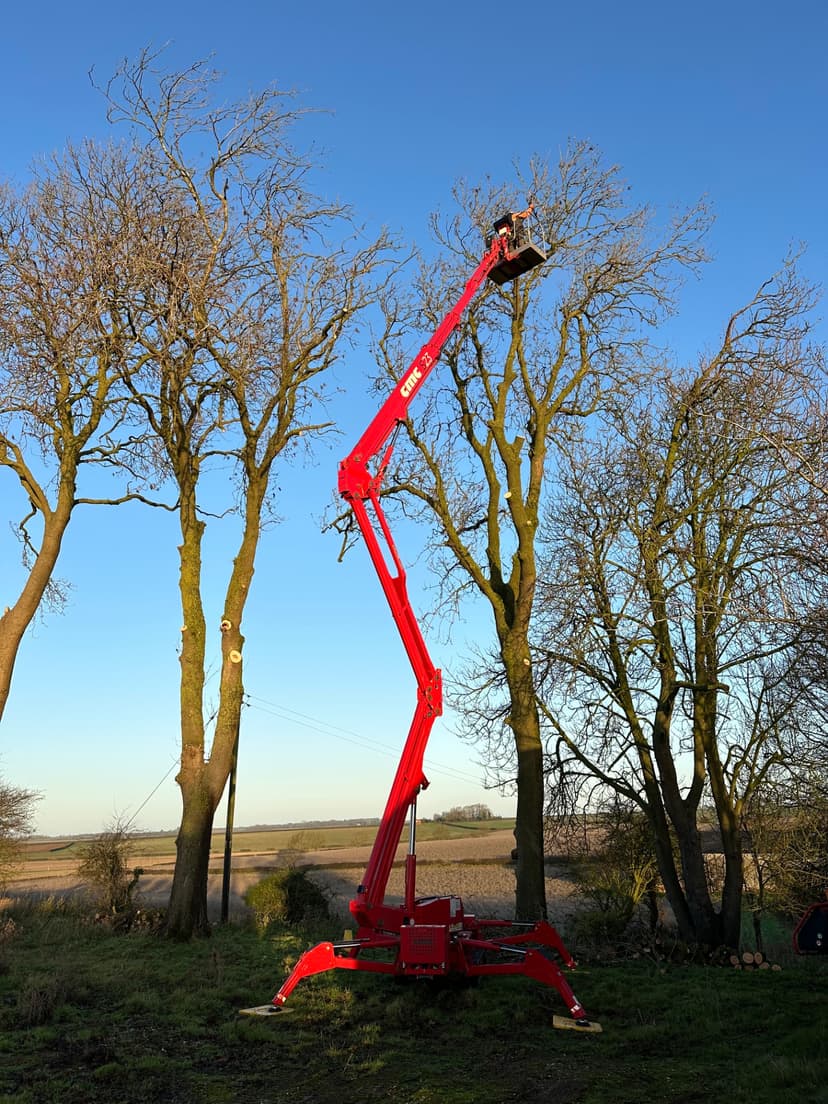
It also changes how the tree is worked on. Brittle wood behaves unpredictably during felling, and anchor points for a climber need careful checking before they are trusted. Where the tree is badly affected, working from a platform rather than climbing is often the safer choice. New Leaf Arb's MEWP access work uses a 23m tracked spider lift and a 13m 4x4 MEWP, which keep the arborist off the tree itself.
Does an ash with dieback need felling?
It depends on what is underneath it. The guidance is clear that healthy ash should not be felled just as a precaution. Some trees show tolerance to the disease and are valuable to keep.
The priority is trees where a failure could hurt someone or damage property:
- Ash next to roads, lanes and footpaths.
- Ash over houses, garages, sheds and parked cars.
- Ash beside play areas, car parks and places people gather.
- Ash over overhead power lines, which needs a utility arborist and the network operator.
For these trees, an inspection decides whether deadwood removal, a reduction or full removal is right. A tree in the middle of a field, well away from people, can often be left and watched.
Roadside ash and landowners
Much of Lincolnshire's ash grows along roadside hedges on farmland. If you own the land, you are generally responsible for the trees on it, including any that overhang the highway. Checking roadside ash regularly, and keeping a simple record of what was checked and done, is sensible. For larger numbers of trees, see our commercial tree work page.
Before any work: permissions
Ash dieback does not remove the normal rules. Check whether the tree has a Tree Preservation Order or stands in a conservation area, and whether the volume of timber needs a felling licence. Our guide to tree preservation orders in East Lindsey explains how. Dead trees still need 5 working days' notice to the council if they are protected, unless the work is urgent.
After removal
The guidance suggests replacing lost ash with a mix of species rather than a single type, so the next generation of trees is not exposed to one disease in the same way. In open and urban areas, gathering and composting fallen ash leaves in autumn or winter is also recommended.
Getting an ash tree checked
Will and John can look at ash trees across Horncastle, Wragby and the surrounding villages, and talk through whether to keep, reduce or remove them. Where removal is needed, see tree felling and removal and sectional dismantling. Ring Will on 07506 185049 or John on 07538 128890, or send the details through the contact page. Site visits are free and quotes are no obligation.
Published 17 October 2026 by Will, New Leaf Arb Tree Surgeons, Horncastle.