
Tree work can be done at any time of year, but some times suit some jobs better than others. The right timing depends on the type of tree, the type of work, and what might be living in it. Here is how it breaks down for gardens and land around Horncastle.
Late autumn and winter: the main season
For most deciduous trees, the dormant season from late autumn to late winter is a good time for pruning, reductions and felling. With the leaves off, the shape of the crown is easy to see, so it is clear exactly where cuts should go. The tree is not putting energy into new growth, and the work causes less disturbance to wildlife.
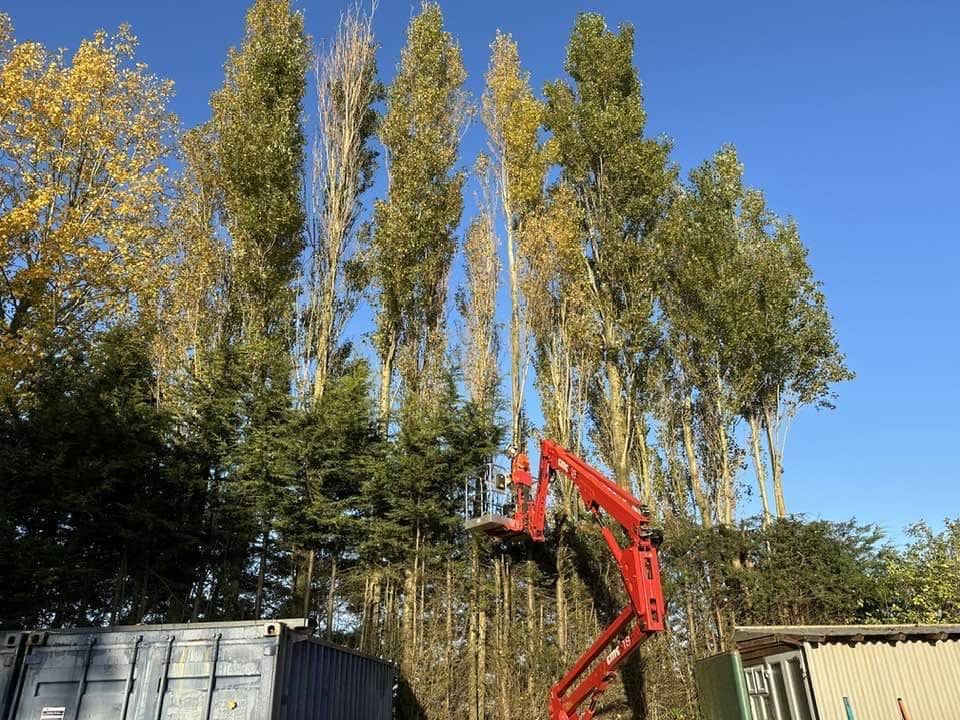
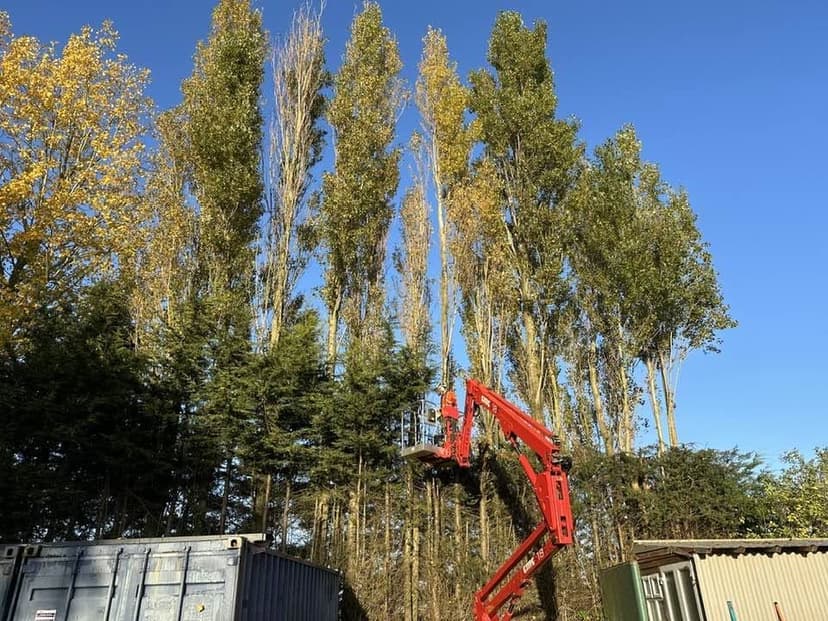
There are practical advantages too. Gardens are quieter, borders have died back, and brash is lighter to handle without leaves on it. The one drawback in Lincolnshire is ground conditions. Heavy soils and low-lying fen-edge land turn soft in winter. That is where tracked kit helps: New Leaf Arb's 23m tracked spider lift spreads its weight and works on soft ground. Read more on our MEWP access work page.
When to avoid pruning
Arboricultural advice is to avoid two windows for routine pruning where you can:
- Spring leaf flush. While the sap is rising and new leaves are opening, the tree may be more vulnerable to pests and disease.
- Autumn leaf fall. As the leaves turn, the tree is drawing resources back into itself. Heavy cutting then can leave it short for the following spring.
Neither is a hard rule. Light work and safety work can be done at any time.
Trees that bleed sap
Some trees leak sap heavily if cut while the sap is rising in late winter and early spring. The RHS lists birch, walnut, maple and vines among them, along with others including hornbeam, magnolia, mulberry, poplar and lime. Bleeding is usually harmless, but it is messy and best avoided:
- Birch: prune from late summer to mid-winter.
- Walnut: prune in mid-summer.
- Japanese maples: after leaf fall but before January.
Cherries and plums
Trees in the Prunus family, which includes cherries and plums, are better pruned in the growing season rather than winter. Plums are usually pruned in early spring or mid-summer to reduce the risk of silver leaf disease, and cherries soon after flowering. A winter cut on a plum tree is one of the easiest ways to invite disease.
Bird nesting season
Natural England treats February to August as the bird nesting season, and the busiest period runs roughly from 1 March to 31 July. Under the Wildlife and Countryside Act 1981, damaging or destroying an active nest is an offence. Hedges and dense conifers are favourite nesting sites.
That does not mean nothing can happen in spring and summer. It means every tree and hedge is checked before work starts, and if there is an active nest the work is changed or put off. For big conifer hedge reductions, it makes sense to plan for autumn or winter.
Evergreen hedges
The RHS suggests mid-spring for renovating evergreen hedges, once the frost risk has passed and they are growing again. In practice that sits inside nesting season, so the hedge needs a careful check first. Routine trimming of conifer hedges in late summer works well once nesting has finished.
Jobs that should not wait
Some work should go ahead whatever the season:
- Storm-damaged trees with hanging or split limbs. See our guide to storm-damaged trees.
- Dead or dying trees close to houses, roads or paths.
- Branches growing into overhead power lines, which need a utility arborist.
- Trees or hedges blocking sight lines on lanes and driveways.
Planning ahead
If you are thinking about a crown reduction, a felling or a hedge reduction, getting a site visit booked early gives time to check for Tree Preservation Orders and conservation areas first. Our guide to tree preservation orders in East Lindsey explains the notice periods. New Leaf Arb covers Horncastle, Woodhall Spa and the surrounding villages for domestic tree surgery through the year. Ring Will on 07506 185049 or John on 07538 128890, or send the details through the contact page. Site visits are free and quotes are no obligation.
Published 21 October 2026 by Will, New Leaf Arb Tree Surgeons, Horncastle.